

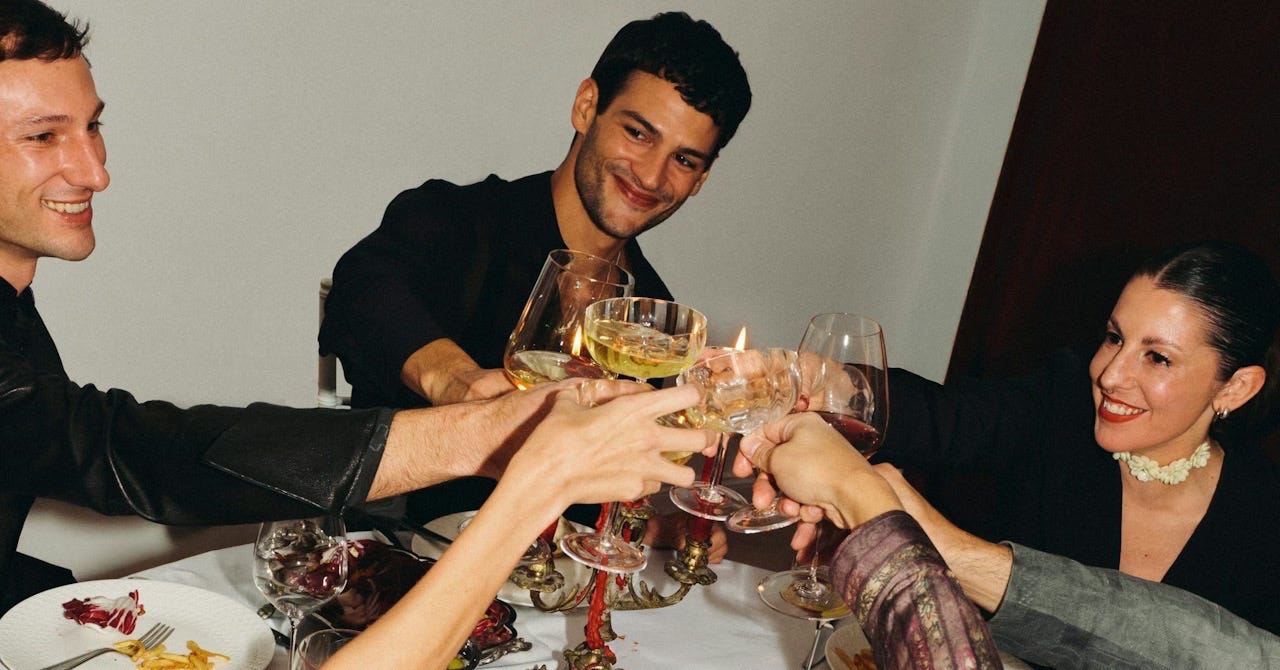
There is a certain mysticism - or morbid fascination - in re-watching old Friends or Sex and the City episodes, where, somehow, we come to see as almost idyllic the act of gathering around an object, be it a Cosmo, or just a languid coffee and chat with our friends. Has creating memorable moments become one of the last luxuries most craved by our society? If so, those who create, curate, and moderate these spaces emerge as the true holders of status.
The Death of Third Places
We live in a world where socialisation seems to be hanging by a thread - observe the fucking dire statistic that Only 4.1 percent of Americans attended or hosted a social event on an average weekend or holiday in 2023.
Much of this can be put down to the disappearance of third places. What we are facing is the fact that these places for leisure and human connection - which, by the way, are defined by democratic accessibility - require infrastructure that no longer exists or has been systematically dismantled.
Privatisation of public space. Hostile architecture designed to prevent lingering. Coffee shops optimised for turnover. Libraries defunded. Parks surveilled. The logic of capital doesn’t accommodate spaces where people gather without transacting, ergo they get squeezed out of existence.
When third places vanish - and when governments and institutions, both public and private, fail to guarantee spaces for leisure and human nurturing with others - we’re forced to create these spaces themselves. However, for logistical, monetary, infrastructural reasons, and more, the spaces that we, or a particular group of people, are able to create are rarely designed for everyone.
On Reanimation in Zombie Times
What is increasingly emerging as an ‘evolution’ of third places is not really the third place at all - it’s a dolled up reanimated corpse typical of the Zombie times we live in. Curated, exclusive, filtered, branded.
Private fashion salons for friends of the house, itinerant chef’s tables, invitation-only screenings. All operate within the same logic: access itself as the currency. These are not events designed for mass participation; rather carefully curated moments where presence signals belonging, where being invited matters more than being seen.
Nobody is immune. The ultra-rich are trading traditional luxury assets for luxury experiences. Even for them, authentic experience has been replaced by its performance. It’s no longer enough to attend an event; you must be part of the show - and for many, being part of the show now means creating moments within pop culture. Wimbledon has surged in recent years, in great part due to the fact that it places the social theatre of the event on the same pedestal as the sport itself.
To be Known, not just Seen
A gap has emerged between the aspiration once shaped by the promises of early social media and what this shift reveals instead: our desire to be known, not just seen.
Being seen is algorithmic - 10,000 followers watching your stories. Being known is analog - eight people around a table who remember how you take your coffee. The first scales infinitely. The second doesn’t scale at all. And that’s precisely what makes it luxury.
Being known requires time, repetition, and crucially, vulnerability. It means showing up in the same room with the same people often enough that patterns emerge. Known people remember your coffee order. They know which topics make you light up and which ones you’d rather avoid. They can tell when something’s wrong before you say it.
The Host as Aspirational Identity
If everyone is selling access to an inner circle, what constitutes real community? The answer lies in the hosts.
Creating genuine community has become a powerful status symbol because it requires a specific and increasingly rare set of skills. The host must have enough cultural capital and sensitivity to read the habitus of each guest and anticipate frictions; who speaks to whom and when. What kind of activities, games, and conversations are right for that environment. And they know how to build an atmosphere that enables people to walk in, drop their guard, and authentically connect.
This is an exercise in precision not unlike Anna Wintour’s Met Gala seating chart: the art of creating human connection without the attendees realising the work involved. The effortlessness is the performance, is the status symbol.
The success of books such as The Art of Gathering or games like We’re Not Really Strangers speak directly to this: they’re products for the architects of these spaces, who become behavioural designers. The manual exists because the skill is no longer ambient. We’ve forgotten how to gather, so we need instructions.
Grounding this for a second in material reality: hosting requires resources most people simply don’t have.
You need space large enough to accommodate guests comfortably. In an era of shrinking apartments and rising rents, this alone is prohibitive for many. You need disposable income for food, drinks, and the inevitable wear and tear on your home. You need time - not just the hours of the gathering itself, but the preparation before and cleanup after.
You need energy. In my piece on wasteful time, I identified how post-optimisation is only accessible to those with surplus capacity. The same applies here. After a 50-hour work week, after side hustles and algorithmic content creation and emotional labor, who has the reserves to host? To perform ease and abundance even when you’re exhausted?
You need geographic proximity to a friend group. Precarity scatters people - jobs in different cities, cheaper rent further out as the inner city YoPro becomes the outer city parent, the constant churn of relocation. Building the kind of recurring community that makes hosting worthwhile requires stability most people don’t have.
This ability to create community is as much about surplus as skill. This is why the Instagram chefs, the salon hosts, the dinner party architects, are often those with significant class privilege, even if they perform bohemian aesthetics.
Creating Brands Outside the Panopticon
The easy answer here is to tell brands to stay the fuck away from ‘community building’. More difficult is to admit that they may have a role in rebuilding community infrastructure - IF they can play by the rules.
This connects to everything from the previous installments of this series: How can you create warm, private, safe atmospheres where the people present care about the thing, not being seen at the thing? How can you create post-optimisation spaces where your activation isn’t just about trying to get people to post about it - it’s enough for them to just exist and spend time there?
The paradox here is that brands need scale, while community requires intimacy. The solution is what we might call anti-spectacle: spaces where presence matters more than performance.
Not because phones are bad, but because the possibility of documentation changes behaviour. Remove that possibility, and people can actually be present.
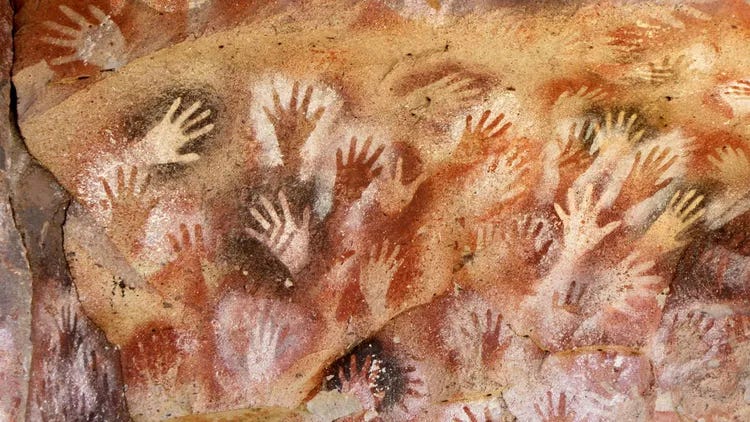
BeReal attempted to solve this through tech - randomized photo prompts to capture ‘authentic’ moments. But tech solutions to social problems inevitably become more problems. Alarms to take the photo. Anxiety about streaks. The mechanics diluted the purpose.
Real anti-spectacle can’t be coded. It requires human curation. Renaissance Fairs and Comic Cons understand this instinctively: create space for people to obsess together without performing for an external audience, and community emerges organically. No one’s performing cool. Everyone’s geeking out.
How can you create offline experiences built around hyper-specific niches that give a group of people the chance to really nerd out over something? Forget ‘wellness’, give me Victorian taxidermy. Not “gaming,” but a speedrunning of Croc: Legend of the Gobbos. The narrower the focus, the deeper the connection.
Because if your “community” can be switched off with the press of a button, you don’t have a community. You have customers.
Read the final part in the series:

Whenever I get an e-mail from your substack I'm already anticipating a very well researched and articulated take on what feels so recent it's almost in the immediate future, and I kinda already know but would've never articulated so clearly - and I wasn't disappointed. You've got skills and they're beautiful to watch. Thanks man
Very well done