
Post-Luxury Status Symbol #2: Wasteful Time
We’ve spent two decades optimising ourselves into exhaustion, and now the flex is declaring you were never stressed in the first place.

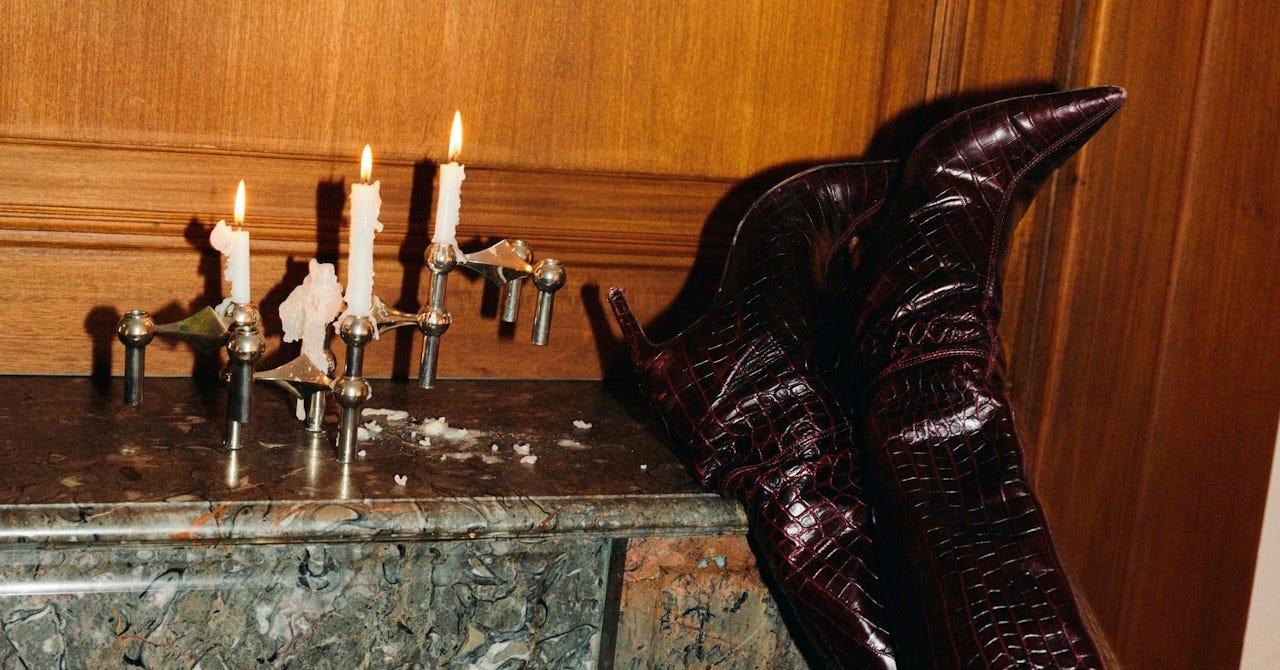
In Eat, Pray, Love, an Italian man tells our hapless protagonist her problem is that she’s American - Americans don’t understand pleasure because they believe it must be earned through exhaustion. Italians, he explains, have mastered il dolce far niente: the sweetness of doing nothing.
Fifteen years later, that sweetness has become the ultimate luxury.
The Optimisation Trap
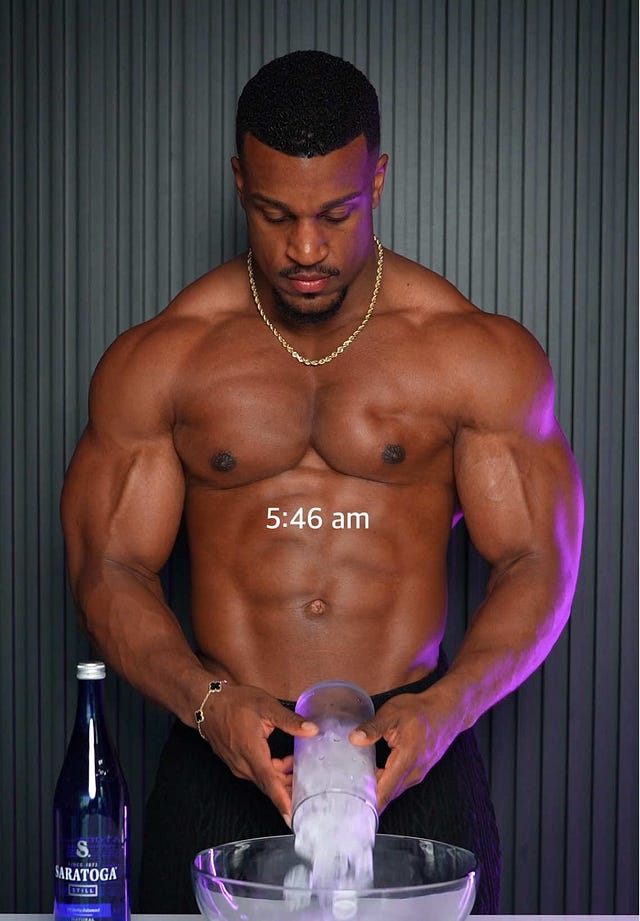
Since the 2010s, self-optimisation has been aspirational. We all read Trick Mirror, you know the deal. 5 AM rise. Journal. Cold plunge. Barre Pilates. Grind. These behaviours were celebrated as high status, and profitable too, the self-improvement industry being valued at approximately $40 billion USD in 2024.
Thorstein Veblen argued that people signal wealth through conspicuous consumption, conspicuous waste, and conspicuous leisure. Had he lived into the 21st century, he might have added a fourth: conspicuous grinding. The performance of perpetual productivity. Capitalism convinced us this is what rich people actually do. It isn’t.
 Tiktok failed to load.
Enable 3rd party cookies or use another browser
Anne Helen Petersen identified the core paradox of millennial work culture: “Everything that’s good is bad, and everything that’s bad is good.” Leisure makes you feel guilty because you’re not working. Working constantly feels virtuous because that’s what success demands. We optimised our work, then ourselves, then wondered why we felt empty.
We’ve traded the self for data about the self, turning ancient practices - ayahuasca, mindfulness, matcha - into quantifiable wellness products. Never have we spent so much money trying to connect with ourselves whilst feeling more disconnected than ever.
The New Leisure Class
What’s emerging now is a pendulum swing towards a new aspirational leisure class: people whose value isn’t tied to what they do, but to how effortlessly they exist.
In a culture where people must optimise to extremes just to maintain what previous generations achieved by simply showing up, real luxury is being able to go post-optimisation and declare: I am enough as I am.
Time itself has become precious, so the ultimate status is to be wasteful with it. Complete autonomy over your schedule. The ability to meet anyone, whenever, and always know the right spot. To decline opportunities based on values or vibes. To partake in long, leisurely meals with no rushed ending.
These are people whose ability to earn is directly tied to their ability to perform ease. They have vague titles - Creative Director, Cultural Consultant - deliberately, because their work is the milieu. They embody what the rest of us are too exhausted to access.
Neo-Leisure and Its Discontents
Although many activities today would have been considered leisure by previous generations - skincare rituals, vinyl listening bars, elaborate dining experiences - the question remains: is it still leisure if an algorithm told you to do it?
Do we go to these places to enjoy them, or to photograph them? To prove we were there, that we understand taste, that we’re the kind of person who knows how to waste time beautifully?
If nobody could see you, if you couldn’t post about it, would you still do it?
If so, that’s neo-leisure. If not, it’s unpaid labour, the performance of joy for an invisible audience.
This is the contradiction at the heart of Neo-Leisure: the moment you perform it, you’re optimising again. The ability to waste time becomes another metric to track, another behaviour to perfect. We’ve simply replaced productivity optimisation with leisure optimisation. One exhausting performance becomes another.
And who can actually afford to go post-optimisation? Those with inherited wealth. Those whose social capital guarantees opportunities without constant hustle. Those in industries where appearing effortlessly cultured is the work. Those whose rent doesn’t depend on side gigs and algorithmic visibility.
For marginalised communities, for precarious workers, for anyone without generational security, the luxury of wasting time remains inaccessible. They’re still grinding because they have to. The status symbol isn’t in wasting time. It’s in having enough capital that you don’t need to justify how you spend it.
The leisure class has always existed. What’s changed is that it’s now performed as counterculture, as resistance to grind culture, as enlightenment.
The Commodification of Ease
If you’re building for this shift, the question is how to create genuine sanctuary from optimisation.
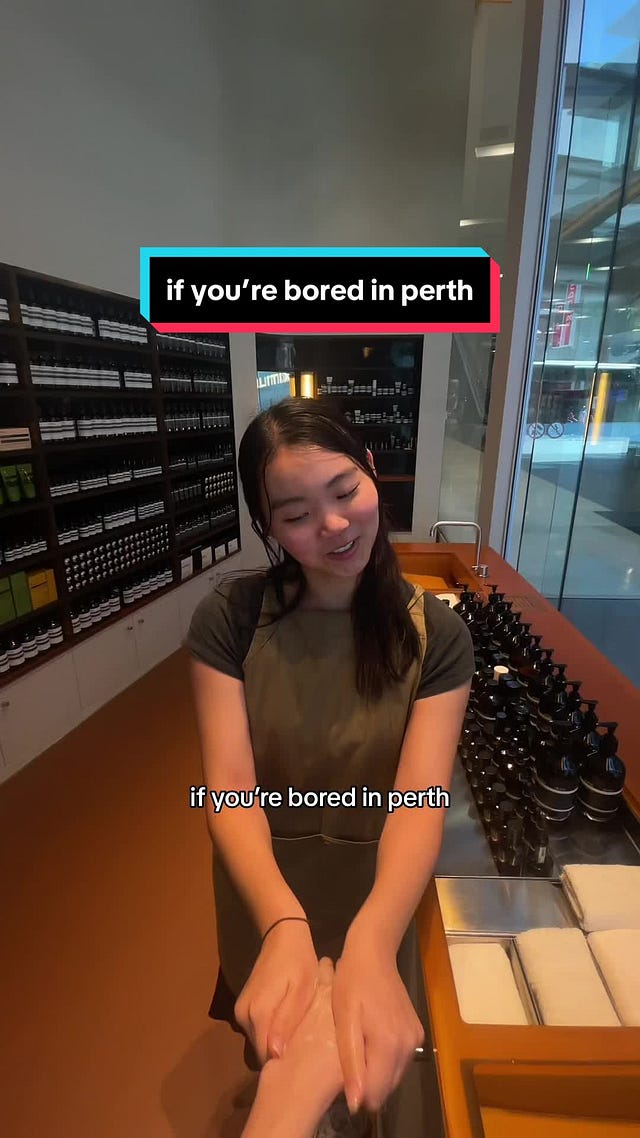
Aesop understood this decades before Neo-Leisure became discourse. Their store experience isn’t about skincare. It’s about stepping out of efficiency entirely.
Slow-pour product demonstrations. Intricate architectural details. The ritualistic hand-washing that turns a mundane act into ceremony. They became a status symbol not because their products are expensive, but because they sell permission to waste time beautifully. Natura and L’Oreal’s successive acquisitions of the brand may have sandblasted a bit of the cool off in exchange for scale, but the underlying ideology is sound (this interview between Eugene Rabkin and Aesop founder Dennis Paphitis is one of my favourite on the internet, and, between you and me, a read I find very funny).
 Tiktok failed to load.
Enable 3rd party cookies or use another browser
Or consider Lohause, whose products are designed around contemporary icons but whose brand presence feels like an ode to life itself - with the product almost incidental. The message: life is meant to be enjoyed, and we’re simply part of your enjoyment.
These brands work because they understand the underlying desire isn’t for products. It’s for a world where you don’t have to justify your existence through constant productivity.
The opportunity for brands is to design experiences that let people step out of ‘leisure optimisation’ and into existing. To give access to effortlessness. To allow people to feel present and enough as they are.
But beware: the moment you commodify the permission to waste time, you risk turning it into another thing to optimise, another performance to perfect, another status marker to chase. The wellness industry already made that mistake.
Odell wrote that “nothing is harder to do than nothing”. In an era where attention and consumption are currency, wasting time becomes an act of resistance.
Of course, in line with last week’s status symbol on connected privacy, this resistance works best if it’s wasted it without anyone knowing. No photos. No documentation. No proof you were cultured enough to understand il dolce far niente.
The greatest luxury might be doing nothing and feeling no need to signal it at all.
So yes, have that wine with friends. Bake bread for no reason. Listen to an album without shuffling. But ask yourself why you’re doing it. If the answer involves anyone’s perception but your own, you’re still performing.
Be intentional with your frivolity. Just don’t optimise it.
Read the next post in the Post-Luxury Status Symbols series:
"If nobody could see you, if you couldn’t post about it, would you still do it? If so, that’s neo-leisure. If not, it’s unpaid labour, the performance of joy for an invisible audience." - Nailed it 👏🏻
I agree with a lot of this, but I also wonder if we’re missing a quieter middle ground. For many people, the move away from optimisation isn’t about performing ease or “wasting time beautifully”, it’s about recovery. After years of pushing productivity to its limits, pulling back can be less about status or resistance and more about restoring balance and basic capacity. Not il dolce far niente... just recalibration.